Do Texas Landlords Really Verify ESA Letters Before Approving a Tenant
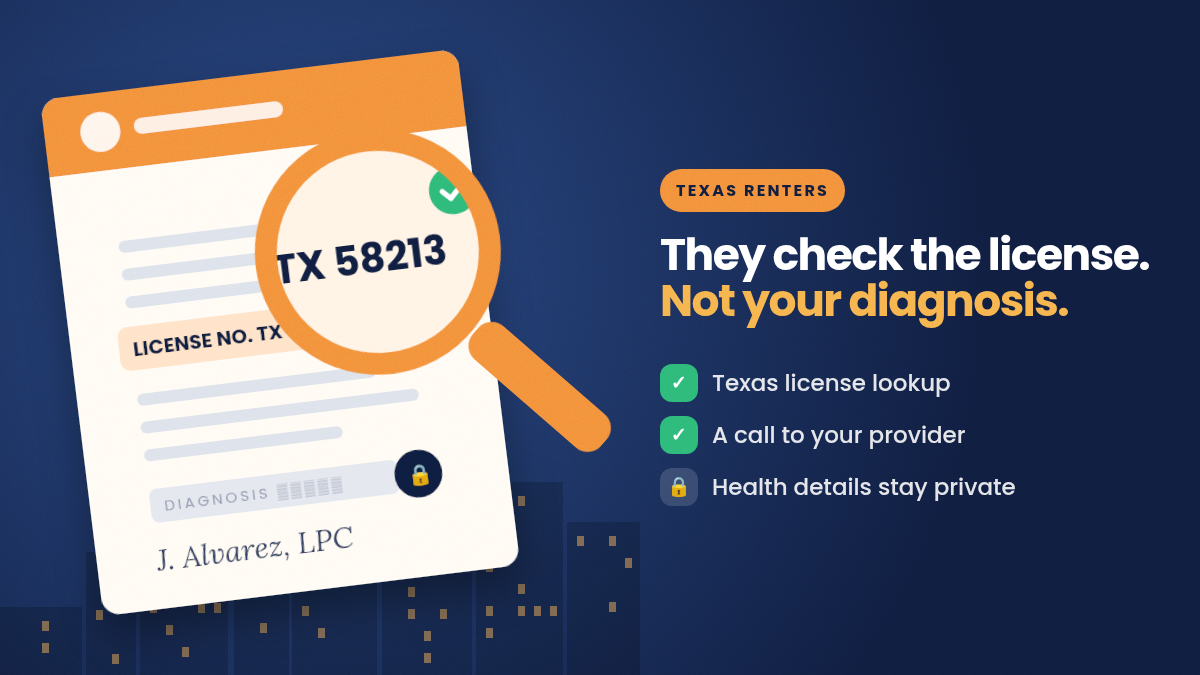
Many do, and the check is usually simpler than renters expect. A landlord or property manager can confirm that the clinician who signed the letter holds an active license and can contact that provider to confirm the letter was issued. What they cannot do is demand your diagnosis, therapy notes or medical records. Knowing where that line sits helps you prepare paperwork that clears review.
The smoothest approvals tend to go to tenants whose paperwork answers the landlord's questions before anyone asks them. A verified ESA letter for Texas housing carries the details a property manager needs to run a quick check. That means fewer emails back and forth and a shorter wait between your application and a decision on your lease.
Do landlords actually verify ESA letters?
Yes, many Texas landlords run a basic check, though how far it goes depends on the property.
Large apartment communities in Houston, Dallas, Austin and San Antonio often follow a written accommodation process. A leasing office may route your letter to a compliance team, which looks up the clinician's license and sometimes calls the number on the letterhead. This step is routine and does not mean the landlord doubts you personally.
Smaller landlords and individual owners may skip the formal process, but many still read the letter closely for warning signs. Some ask a property management company or an attorney to review it on their behalf. In practice, a landlord ESA letter check usually covers a short list of points:
- Whether the clinician holds an active license in Texas
- Whether the letter is signed and shows an issue date
- Whether the provider's contact details are real and reachable
- Whether the letter states that you have a condition that limits daily life and that the animal helps
Verification has become more common as landlords see more letters from sources that cannot be traced to a real clinician.
A careful check protects the landlord from accepting paperwork that would not hold up, and it protects tenants with genuine letters from being lumped in with those who bought a certificate online. For most renters, the check is a formality that takes a few days.
What can a Texas landlord legally check on an ESA letter?
A landlord can confirm the clinician's license and contact the provider, but cannot ask about your condition.
License status is public information. A property manager can enter the clinician's name or license number into the state licensing board's online lookup and see whether the license is active. They may also call or email the provider listed on the letter to confirm that the clinician wrote it. Both steps fall within reasonable verification of an accommodation request.
The limits are just as clear. A landlord cannot ask which condition you have, request your medical records, or require you to fill out their own medical form in place of your letter. They also cannot ask your clinician to disclose details of your treatment. If a request crosses into your private health information, you can decline it politely and in writing.
Landlords may, however, ask reasonable questions about the animal itself. They can ask what type of animal it is, request basic information such as vaccination records where local rules require them, and set out ordinary expectations about noise, waste and care. These questions concern the animal and the property, not your health, so answering them does not weaken your privacy.
What details make ESA letter verification in Texas quick?
A letter that shows every verifiable detail on its face is usually approved without follow up questions.
Property managers move fastest when they do not have to chase information. The letter should sit on the clinician's letterhead and list the clinician's name, license type, license number, state of licensure, issue date and contact details. It should carry the clinician's signature and a clear statement that you have a condition that limits daily life and that an ESA helps with it.
Missing pieces cause most slowdowns. A letter without a license number forces a name search that may return several people with similar names. A letter without a phone number or email leaves the landlord nothing to confirm. An undated letter raises questions about whether the evaluation is current. Each gap adds a round of messages before your application can move forward.
It also helps to submit the letter early. Sending it with your rental application, or as soon as you sign a lease, gives the leasing office time to complete its check before move in day. Keep a digital copy and a printed copy, since some offices accept only one format, and note the name of the staff member who received it.
How does a licensed therapist ESA letter in Texas hold up under review?
It holds up well when it comes from a clinician licensed in Texas who evaluated you directly.
Several types of licensed professionals can write the letter, including a licensed professional counselor (LPC), a licensed clinical social worker (LCSW), a psychologist or a psychiatrist. What matters most is that the license is active in Texas and that the letter reflects a real evaluation. A letter from a clinician licensed only in another state is far more likely to draw questions.
Many renters now use an online ESA letter service that connects them with a clinician licensed in their state through a live evaluation. RealESALetter.com letters include the clinician's license number, issue date and contact details, so a landlord can check them quickly. Every element a property manager looks for sits on the letterhead, which keeps the review short.
No condition qualifies automatically. Anxiety disorders, depression, PTSD, bipolar disorder and ADHD are often evaluated, but the clinician decides during the evaluation whether your condition substantially limits one or more major life activities and whether an animal helps. That judgment is what gives the letter its weight when a landlord reviews it.
Why does a landlord ESA letter check sometimes lead to a denial?
Most denials come from letters that cannot be verified or from situations outside fair housing protection.
A registry certificate or ID card is not an ESA letter, and no state runs an ESA registry. Letters with no license number, an unreachable phone line, or a clinician licensed elsewhere often fail the check. Your protections come from the federal Fair Housing Act and Texas ESA laws, and they apply to housing that the Fair Housing Act covers.
Even with a valid letter, a landlord can lawfully refuse a specific animal in limited cases: the animal poses a direct threat to others, would cause serious property damage, or would create an undue burden. Since HUD's May 22, 2026 enforcement memo, state fair housing agencies take the lead on enforcement, with HUD in a secondary role.
A denial should be based on the specific animal and the specific facts, not on general fears about a breed, size or species. If a landlord refuses, ask for the reason in writing. A written explanation shows whether the decision rests on lawful grounds or on a misunderstanding that a corrected or clarified letter could resolve.
What should you do if your ESA letter verification in Texas stalls?
Respond in writing, point the landlord to your clinician's contact details, and keep a record of each exchange.
- Send a short written reply confirming you submitted your letter and the date you sent it
- Repeat the clinician's name, license number and contact details in your message
- Let your clinician know a landlord may reach out to confirm the letter
- Save every email, text and form so you have a clear timeline if problems continue
Delays usually come from a busy leasing office rather than a refusal. Understanding how landlords verify ESA letters lets you anticipate each request and answer it with the right document. If the landlord asks for something beyond verification, such as your diagnosis, a calm written reply that cites your privacy usually resolves the matter.
If weeks pass with no answer, or the landlord refuses without a lawful reason, you have options. You can ask your clinician to confirm the letter directly with the property manager, request a meeting with the leasing office, or contact your state fair housing agency, which now takes the primary role in handling housing discrimination complaints. Your written record will support whichever step you take.
Frequently Asked Questions
Can a landlord call my therapist about my ESA letter?
Yes. A landlord may contact the provider listed on your letter to confirm that the clinician issued it. The clinician should confirm only that the letter is genuine, not discuss your condition or treatment. It helps to tell your clinician in advance that a call may come.
Does an ESA letter for housing in Texas need to name my diagnosis?
No. The letter should state that you have a condition that limits daily life and that the animal helps with it. Naming the specific diagnosis is not required, and a landlord cannot demand it. A letter that includes more medical detail than needed can expose private information without making approval any more likely.
Why does the clinician license number on an ESA letter matter?
The license number is the fastest way for a landlord to confirm the clinician is licensed in Texas. Without it, a property manager has to search by name, which slows the review and invites more questions. It also removes any doubt about which clinician signed the letter.
Do online ESA letters pass verification in Texas?
They can, as long as a clinician licensed in Texas evaluated you and signed the letter. Landlords check the license and the contact details, not whether the evaluation happened in person or by video. A letter from a clinician licensed only in another state is the most common reason an online letter is questioned.
Can a landlord charge pet rent for an emotional support animal?
Under the Fair Housing Act, an approved ESA is an assistance animal, not a pet, so pet rent and pet deposits generally do not apply. You remain responsible for any actual damage the animal causes. A landlord can still deduct the cost of real damage from your standard security deposit.
